Topic cluster

On-prem AI: architecture, cost, and deployment models

3 notes · last update June 9, 2026
Quick answer

On-prem AI means running models (LLM, RAG) on your own infrastructure instead of the public cloud. It makes sense when data is sensitive, covered by NIS2/NDA, or when predictable volume makes owned hardware cheaper than a subscription. Key decisions: deployment model (bare-metal/colo/appliance), GPU selection, and real TCO.

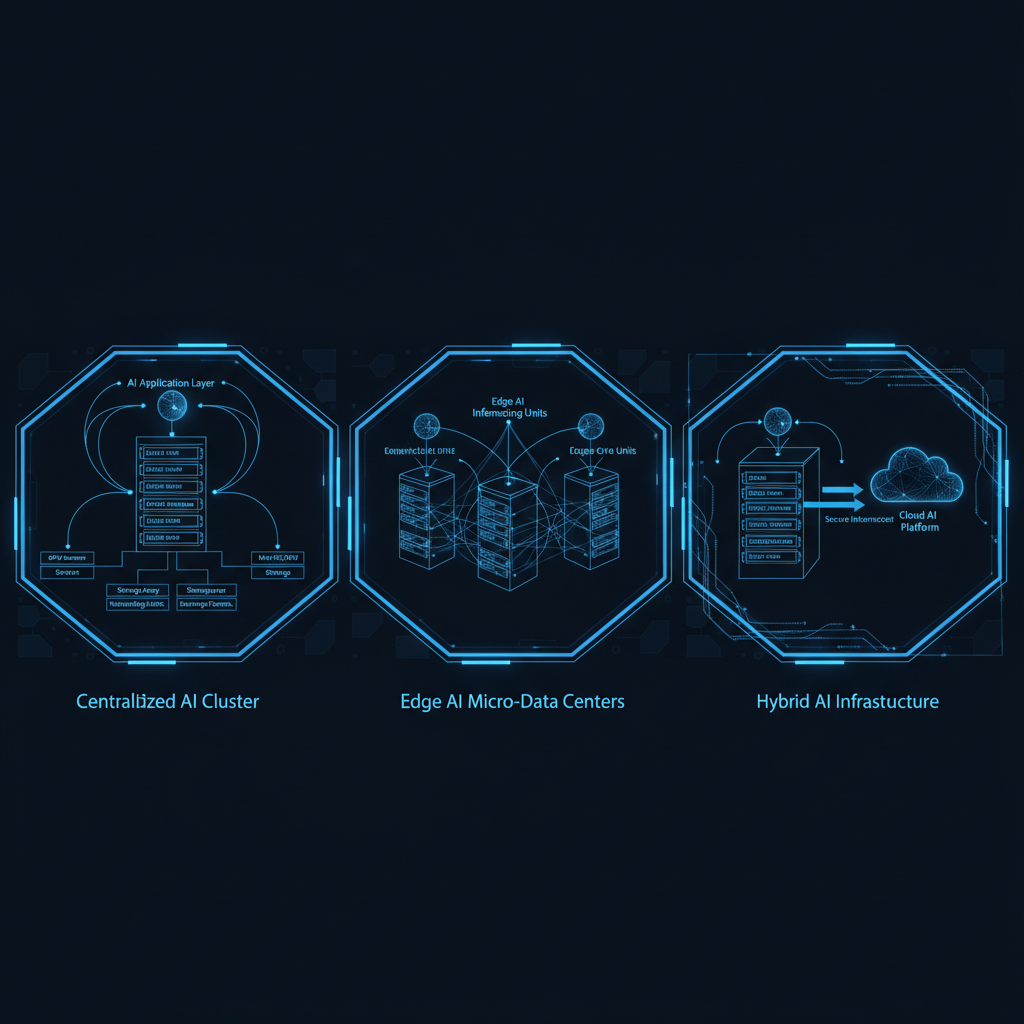
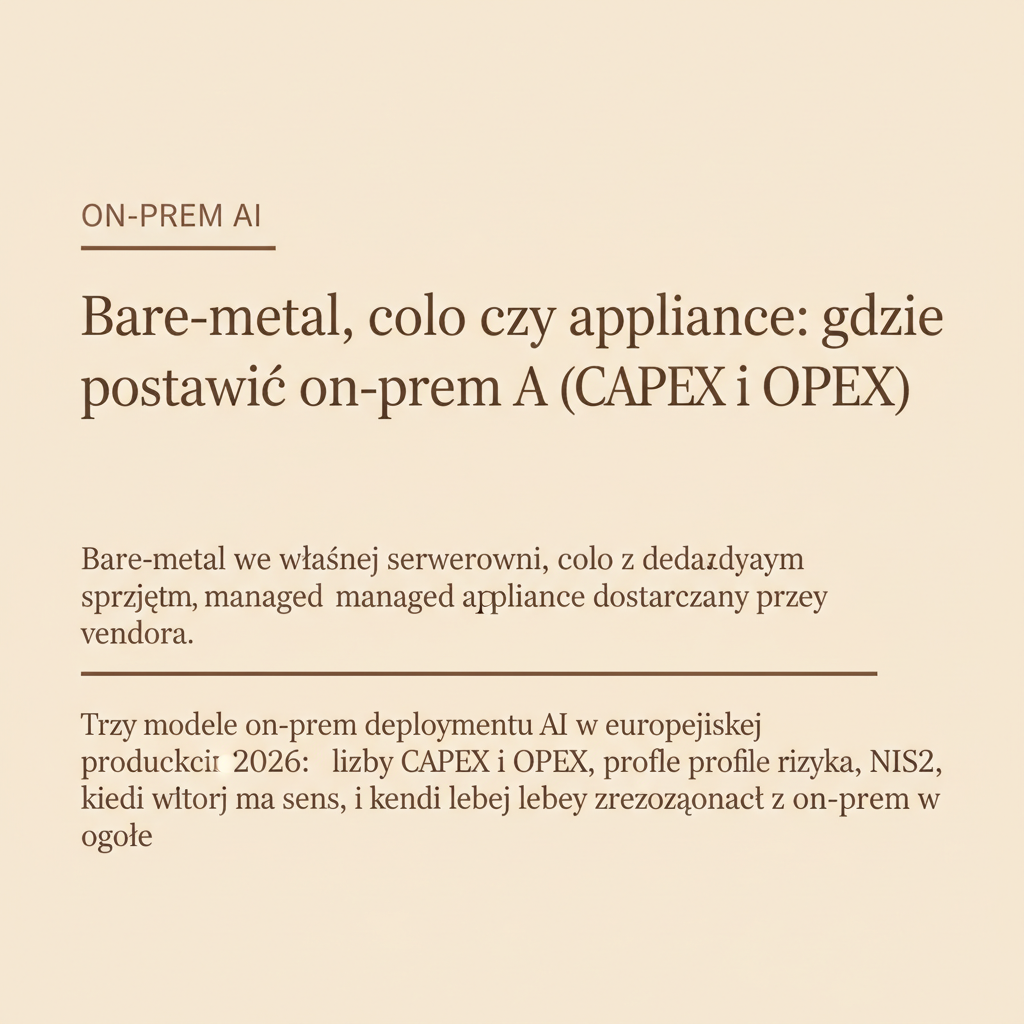
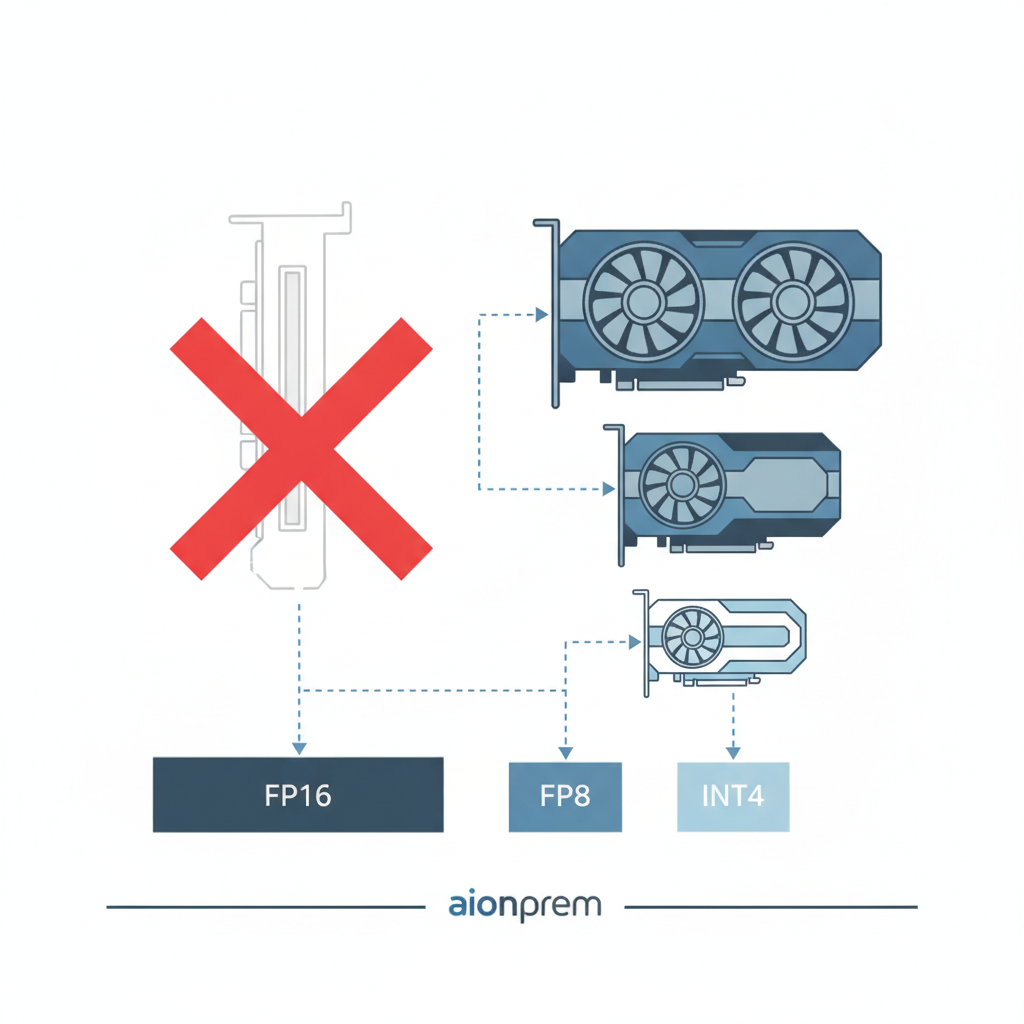
This cluster gathers everything you need for the “on-prem or cloud” decision for AI in European manufacturing, no marketing, just numbers. We cover three deployment models (DIY, productized, managed) and who actually maintains them; the difference between bare-metal, colocation, and appliance in terms of CAPEX and OPEX; and how to calculate TCO so it includes the items most often omitted: staff cost (FTE), energy, cooling, and real, not peak, GPU utilization. We explain card selection by model size (from an ~8B assistant to a production ~70B RAG) and why the inference engine choice (vLLM vs Ollama) can change throughput more than tenfold. We also treat on-prem as a supply-chain risk-reduction tool under NIS2: data never leaves the perimeter. If you want specifics instead of “sovereignty” slogans, start here, then run your case through the TCO calculator.

// notes in this topic
Frequently asked questions
When does on-prem beat cloud on cost?

With predictable, steady load and a 2–3 year horizon, that's when CAPEX + energy + FTE can be lower than a rising subscription/token bill. For irregular, low volume, cloud usually wins.

Which GPU for an 8B vs a 70B model?

Simplified: ~8B fits on a single L40S/RTX-class card; 70B at reasonable throughput usually needs 2× H100-class (depending on quantization and throughput).

Does on-prem solve NIS2 compliance?

Not automatically, it reduces supply-chain risk (no data transfer), but you still have to implement controls (logging, access, incident response).

Want to apply this to your case: architecture, compliance, and cost?

→ Book 30 min