
vLLM vs TensorRT-LLM: Which Engine for On-Prem LLM
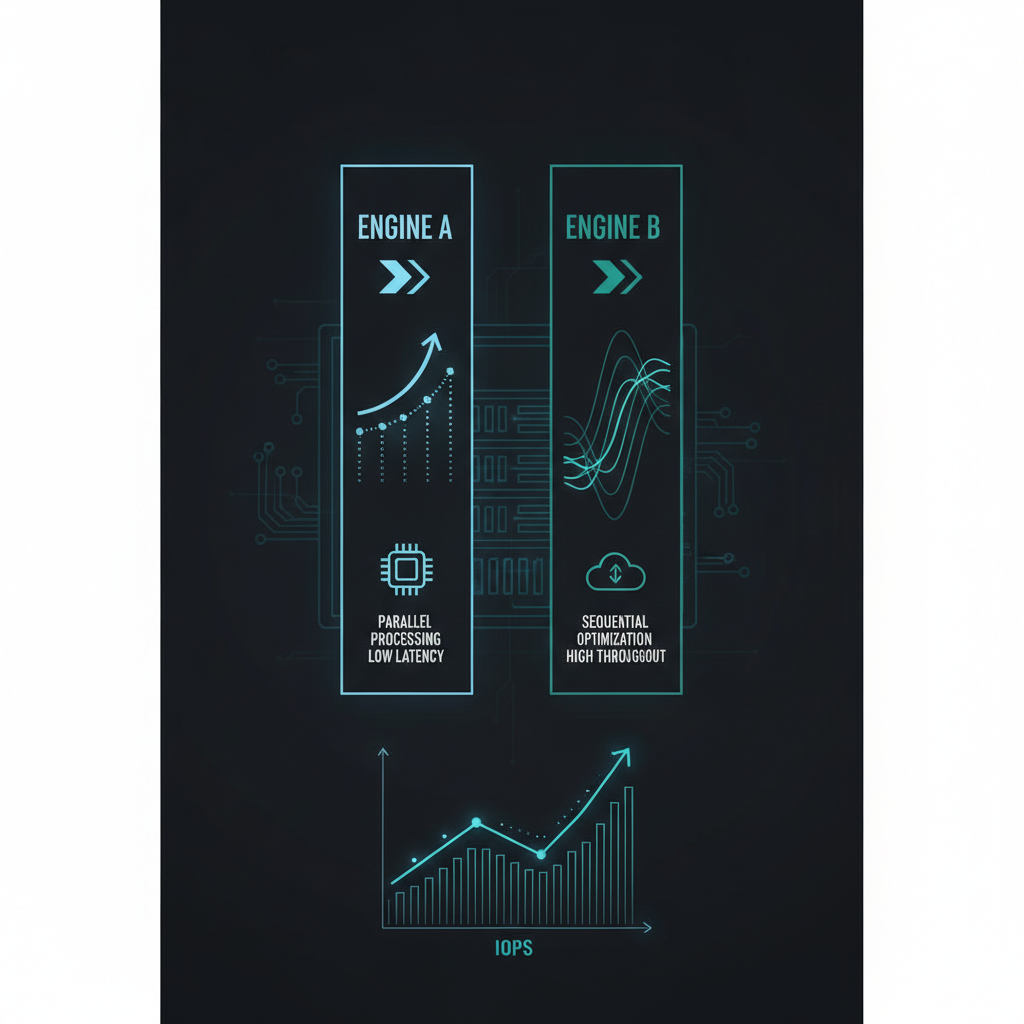
Why the engine is a separate decision from the GPU
Once a company has worked out how many GPUs it needs for Llama 70B, it usually assumes the hard technical call is behind it. It is not. The same 2x H100 server can serve twice as many users depending on which inference engine you run on it and how you configure it. The hardware sets the ceiling. The engine decides how close to that ceiling you actually get.
In practice, for on-prem LLM in mid-size manufacturing the choice comes down to two names: vLLM and TensorRT-LLM. A third, SGLang, enters wherever shared context matters (RAG, long system prompts). This post compares them with numbers and ends with a decision table: which engine for which scenario. Without the claim that one is always better, because it is not.
What these engines actually do
An inference server sits between the model and the user and handles three things: loading weights into VRAM, managing the request queue (batching) and returning tokens. The differences between engines lie mostly in how cleverly they batch and how aggressively they optimize for specific hardware.
vLLM is the open-source project with the broadest model support and the simplest deployment. Its signature is PagedAttention, managing the KV cache like memory pages in an operating system. You launch a model with one command, no compilation step. Updating a model means swapping the weights.
TensorRT-LLM is NVIDIA's library that compiles a model into an optimized engine for a specific GPU architecture (Hopper, Blackwell), a specific precision and a specific batch-size range. That compilation is a separate step that takes time, but in return it delivers the highest throughput the card can produce.
SGLang is an engine with aggressive prefix caching. When many requests share the same beginning (the same long system prompt, the same document in RAG context), SGLang computes that shared part once and reuses it. In pure on-prem RAG this can be decisive.
Numbers: throughput and TTFT on H100
The values below come from an independent SqueezeBits benchmark on a single H100 SXM5 80GB card, model Llama 3.3 70B Instruct in FP8, versions vLLM 0.18, TensorRT-LLM 1.2 and SGLang 0.5.9. Method: prompts of ~512 input tokens, 256 output tokens, measured at rising concurrency.
Aggregate throughput (output tokens per second), higher is better:
| Concurrency | vLLM | TensorRT-LLM | SGLang |
|---|---|---|---|
| 1 request | 120 tok/s | 130 tok/s | 125 tok/s |
| 10 requests | 650 tok/s | 710 tok/s | 680 tok/s |
| 50 requests | 1,850 tok/s | 2,100 tok/s | 1,920 tok/s |
| 100 requests | 2,400 tok/s | 2,780 tok/s | 2,460 tok/s |
Time to first token, median (p50) and p95, lower is better:
| Concurrency | vLLM p50 | vLLM p95 | TRT-LLM p50 | TRT-LLM p95 | SGLang p50 | SGLang p95 |
|---|---|---|---|---|---|---|
| 1 request | 45 ms | 68 ms | 38 ms | 55 ms | 42 ms | 61 ms |
| 10 requests | 120 ms | 195 ms | 105 ms | 170 ms | 112 ms | 178 ms |
| 50 requests | 380 ms | 720 ms | 340 ms | 620 ms | 360 ms | 680 ms |
| 100 requests | 740 ms | 1,450 ms | 680 ms | 1,280 ms | 710 ms | 1,380 ms |
The pattern is clear: TensorRT-LLM leads at every concurrency level once the engine is compiled. The gap is smallest at a single request (~8% over vLLM) and largest at 50 concurrent (~13%). TTFT points the same way: TRT-LLM has lower latency, and the gap widens in the p95 tail, exactly where users feel the stutter most.
The other side is worth knowing too. An older SqueezeBits benchmark on A100 (Llama 3 8B) showed that under a very tight latency limit with a forced small batch (batch 4) it was vLLM that came out faster, 230 tok/s against 197 tok/s for TRT-LLM. In other words: TensorRT-LLM's edge materializes under load and batching, not on single, latency-critical requests to a small model.
What the numbers mean operationally
A dozen percent of throughput sounds like a detail until you convert it into users. If a vLLM server handles 30 concurrent sessions at your SLO, that ~13% edge is realistically 3 to 4 extra sessions from the same hardware. Across two servers that can be the difference between buying a third card and not.
But there is a condition: this edge is free only when the model is stable. Every change of model, precision or target batch-size range in TensorRT-LLM means recompiling the engine. vLLM has no such step. So the numbers in the table are not the whole story. The second half is the cost of running it.
Cold start and maintenance cost
This is where most comparisons stop, and where the on-prem decision is really settled.
| Engine | Cold start (first time) | Subsequent reloads | Compilation step |
|---|---|---|---|
| vLLM | ~62 s | ~62 s | none |
| TensorRT-LLM | ~28 min (compilation) | ~90 s | yes, per model version |
| SGLang | ~58 s | ~58 s | none |
TensorRT-LLM's 28-minute compilation is not a flaw, it is a deliberate tradeoff: you build the engine once per model version, then serve it for months. The problem appears when your team changes models often, tests quantization variants or updates versions every two weeks. Then 28 minutes per iteration plus the need to version engine artifacts turns into real DevOps overhead that vLLM simply does not have.
VRAM usage is practically the same across all three engines (71 to 79 GB on an 80GB H100 for this model in FP8), so memory is not a selection criterion here. The criterion is how many hands you have to maintain it and how stable your model is.
H200 and long context: when memory changes the math
The numbers above are one H100 card. Choosing between H100 and H200 brings in a variable that a short-prompt throughput table does not show: memory capacity and bandwidth. H200 has 141 GB of VRAM against 80 GB on H100, which on long RAG context (15k to 30k input tokens, typical for technical documentation) lets you hold a larger KV cache and higher batch before memory becomes the bottleneck.
Here the engine choice starts to blend with the hardware choice. On long, shared context SGLang with prefix caching can erase TensorRT-LLM's throughput edge, because it does not recompute the same prefix per request. Rule of thumb: the more unique your prompts, the more raw throughput matters (TRT-LLM); the more they share common context, the more prefix caching pays off (SGLang).
Decision table: which engine for which on-prem
| On-prem scenario | Recommendation | Why |
|---|---|---|
| One stable model, maximum throughput under load | TensorRT-LLM | Highest tok/s and lowest TTFT, compile once |
| Frequent model changes, small IT team, fast iteration | vLLM | Zero compilation, broadest model support, simplest deploy |
| RAG with a shared system prompt or long context | SGLang | Prefix caching reuses the shared part, lower latency |
| First deployment, not sure yet what you serve | vLLM | Safe default, migrate off it once the model stabilizes |
| Single-request latency critical, small model | vLLM or TRT-LLM | With a forced small batch the gap blurs, test both |
Default recommendation
For most mid-size firms entering on-prem AI, a sensible start is vLLM: zero compilation, the broadest model support and the least overhead for a team still learning to operate its own LLM. Once the model stabilizes and traffic grows to where a dozen percent of throughput starts to translate into saving a card, migrating to TensorRT-LLM becomes a countable decision. If you know from the start that your main workload is RAG over a shared document base, SGLang is worth testing in parallel with vLLM from day one.
The worst decision is choosing an engine by a vendor's blog benchmark instead of by your own traffic profile. Measure your real distribution of prompt lengths, concurrency and model-change frequency first, then read the tables. The numbers above are a starting point for the conversation, not a verdict.
What this post does not cover
- Multi-node and tensor parallelism beyond one server. All numbers above are a single card or one node. Scaling to 8+ GPUs has its own bottlenecks (interconnect, pipeline parallelism) and deserves a separate post.
- Exact kernel-flag and CUDA-version tuning. Swings of ±10 to 15% between engine and driver versions are normal. Treat the tables as an order of magnitude, not a guarantee.
- Non-NVIDIA alternatives (AMD MI300X, Intel Gaudi). Support in these engines is maturing, but for mixed inference in mid-size production it is still immature.
- Model quality. The engine does not change what the model can do, only how fast it serves it. Model and quantization choice is a separate conversation.
// disclosure & biasesDisclosure and biases
I work on an on-prem AI platform (CortexMine) for European manufacturers. The numbers in this post come from the public SqueezeBits benchmark and public engine-selection guidance, not from our internal tests. Where sources differed (A100 vs H100, small vs large model), I flagged it in the text, because the conclusions are not universal.
A bias I am aware of: I write from the view that "on-prem is a real choice", so I naturally focus on maintenance and control criteria, not only raw throughput. A company serving one model for a year without changes has a different calculus than a team iterating every two weeks, and I try to keep those apart.
Related notes
- Sizing: GPU sizing for Llama 3.1 70B inference: numbers from benchmarks — how many cards to buy before you pick the engine to run on them.
- Pillar: On-prem AI in European manufacturing 2026: architecture guide — the wider architectural context.
Building CortexMine, an on-prem AI platform for European manufacturers under NIS2. Where this bias could affect conclusions, it is flagged inline.
Want to apply this to your case: architecture, compliance, and cost?
→ Book 30 min
What a million tokens costs on-prem: H100 vs H200 vs API
Peak throughput from a benchmark does not tell you what a million tokens costs. The real number is the card's hourly rate divided by tokens per hour, then by utilization. We price a million tokens on H100 and H200, compare with API and show the utilization above which your own GPU wins.
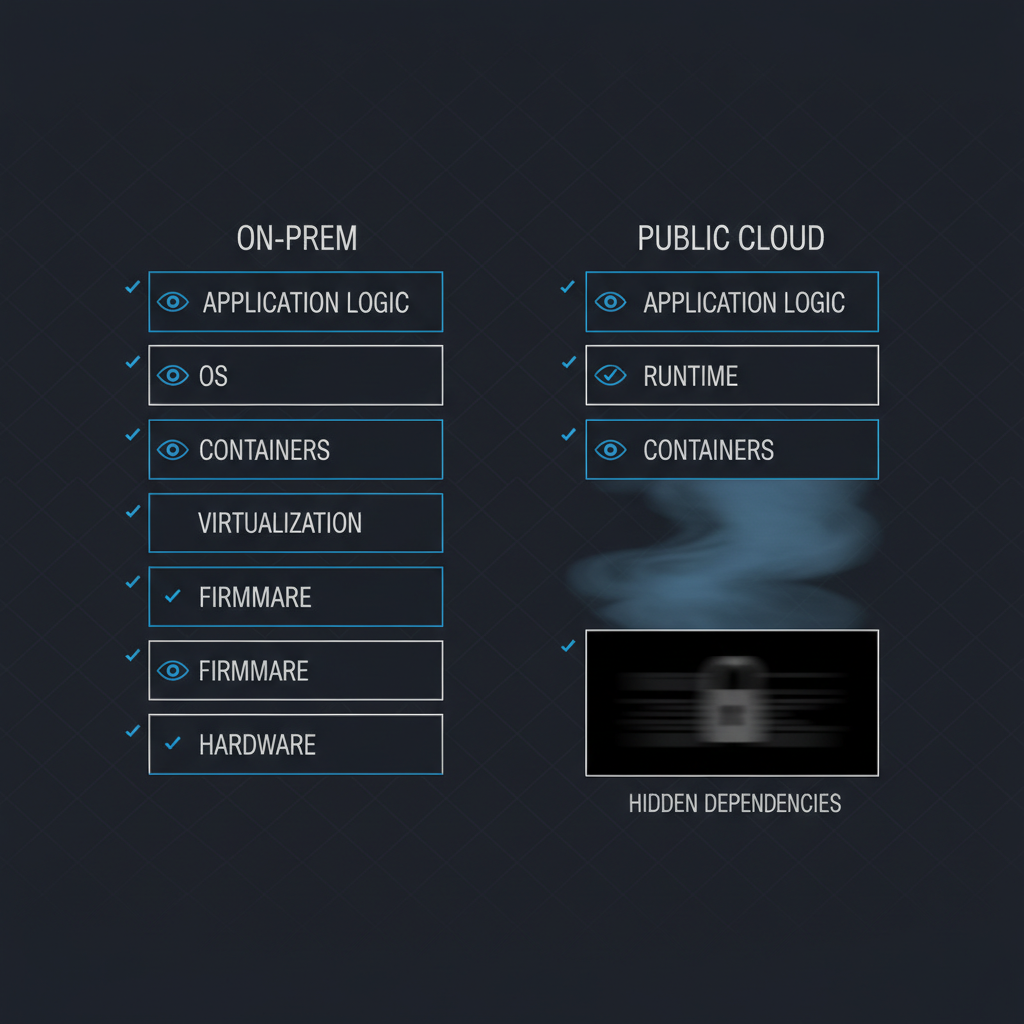
AI architecture resilience: what you can audit on-prem
The europe-west4 outage exposed something worse than downtime: you cannot audit the dependencies your AI runs on. What you can actually verify on-prem, and what a hyperscaler will never show you.
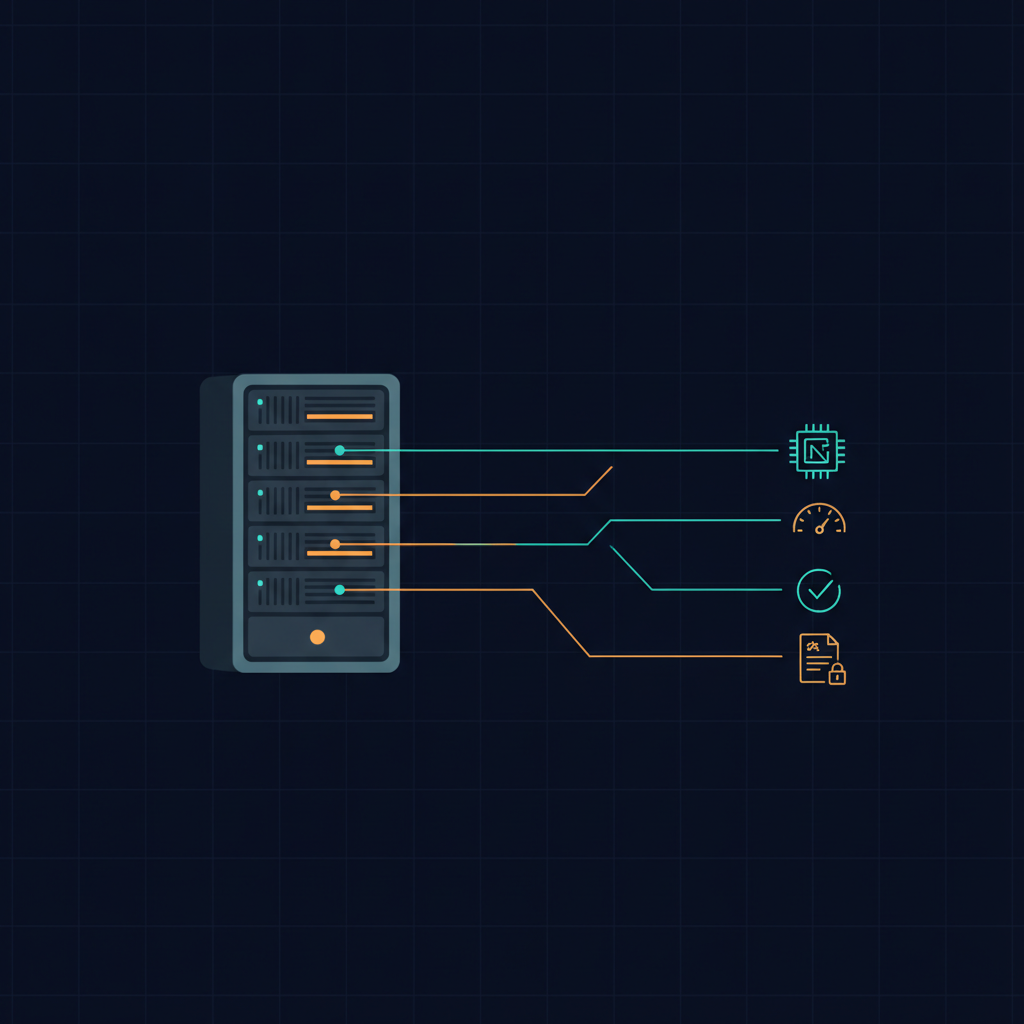
Monitoring and observability for on-prem LLMs: what to log and how
Four telemetry layers for an on-prem LLM: infrastructure, serving, quality and audit. What to log, what not to store, and how observability feeds the audit trail NIS2 expects.